
What is a Polynomial? - Part 2
Video explanation
Explanation
TYPES OF POLYNOMIALS BY NUMBER OF TERMS
Polynomials can be classified according to the number of their terms. The most basic classification includes:
- MONOMIAL: An expression with one term, e.g., 5x³
- BINOMIAL: An expression with two terms, e.g., 3x² - 7
- TRINOMIAL: An expression with three terms, e.g., x² + 4x + 4
If an expression has more than three terms, it is simply referred to as a polynomial. Each of these is part of a broader concept that combines terms according to the rules of exponentiation and basic arithmetic operations.
ORDER AND STANDARD FORM
To facilitate analysis and comparison, it is useful to write the expression in standard form, where the terms are arranged in descending order of their exponents. For example: P(x) = 2x⁴ - 3x² + 7x - 1 is written in standard form because the exponents of the variable x decrease from 4 to 0. The coefficients here are: a₄=2, a₃=0 (implied), a₂=-3, a₁=7, a₀=-1.
IDENTITY OF POLYNOMIALS
Two polynomial expressions are identical (or equal) if they represent the same function. This means that when written in standard form, they must have the same degree, and the coefficients of corresponding powers of the variable must be equal. For example: 4x³ + 2x - 5 and 2x + 4x³ - 5 are identical because, when ordered, they both become 4x³ + 2x - 5. The order in which terms are written does not affect the identity of the polynomial, only the values of the coefficients and their corresponding powers determine equality.
EXPANSION AND SIMPLIFICATION
Expansion involves multiplying out polynomial expressions. For instance, when multiplying two binomials, every term of one expression is multiplied by every term of the other. The result is then simplified by combining like terms (terms with the same power of the variable). For example: (x + 2)(x − 3) = x(x) + x(-3) + 2(x) + 2(-3) = x² − 3x + 2x − 6 = x² − x − 6 This is the fundamental method for handling the products of polynomial expressions, leading to a polynomial in standard form.
CONCLUSION
Understanding the basic types and notation rules for these expressions is an essential step for further dealing with algebraic structures. Ordering, comparing, and expanding allow for systematic work with expressions and prepare for more complex operations such as division, factorization, or graph analysis.
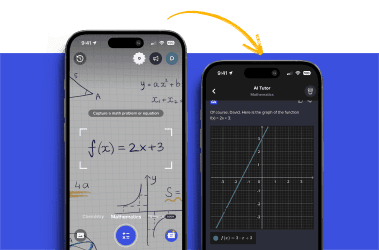


Take a picture of your assignment and use AI tutor.
- Graph of a Polynomial
- Finding Zeros of a Polynomial
- Introduction to Polynomials
- Zeros of a Polynomial
- Operations in the Set of Polynomials