
Arithmetic
3 chapters
Arithmetic is the branch of mathematics that deals with counting and basic operations on numbers, such as addition, subtraction, multiplication, and division. It is based on the rules and properties of numerical operations that enable the solving of everyday computational problems. It is important for understanding basic mathematical concepts and is the foundation for further studies in mathematics.
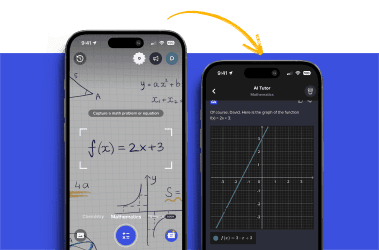


Take a picture of your assignment and use AI tutor.
Multiplication and Division
2 videos
More Division Examples 1

More Division Examples 2
Fractions
Adding Fractions – Example
Subtracting Fractions - Example
Decimal Numbers and Percentages
1 video
How to Divide Decimal Numbers?
Arithmetic – A Fundamental Concept in Mathematics
Arithmetic is one of the most basic and important branches of mathematics. It deals with the study of numbers and basic operations with them, such as addition, subtraction, multiplication, and division. These operations are the foundation for almost all other mathematical concepts and have wide application in everyday life. In this article, we will explore the basic concepts of arithmetic, its history, practical application, and importance for education.
BASIC CONCEPTS OF ARITHMETIC
Arithmetic includes four main operations:
- ADDITION: The process of combining two or more numbers to reach a sum. For example, 2 + 3 = 5.
- SUBTRACTION: The process of taking one number away from another to reach a difference. For example, 5 – 3 = 2.
- MULTIPLICATION: The process of combining two or more numbers to reach a product. For example, 4 × 3 = 12.
- DIVISION: The process of splitting one number by another to reach a quotient. For example, 12 ÷ 4 = 3.
In addition to these basic operations, arithmetic also deals with fractions, decimal numbers, percentages, negative numbers, and exponents.
HISTORY OF ARITHMETIC
Arithmetic has a rich history dating back thousands of years. The first forms of arithmetic operations were used by ancient civilizations such as the Sumerians, Babylonians, Egyptians, and Greeks. Each of these cultures contributed to the development of arithmetic in its own way:
- The Sumerians developed one of the first known number systems.
- The Babylonians introduced the concept of zero and developed sophisticated methods for solving arithmetic problems.
- The Egyptians used hieroglyphs to write numbers and solve practical problems, such as measuring land and calculating taxes.
- The Greeks developed the theoretical basis of arithmetic and explored the properties of numbers.
PRACTICAL APPLICATION OF ARITHMETIC
Arithmetic is present in almost all aspects of our lives. Here are some examples of how we use it every day:
MANAGING FINANCES
Arithmetic is key to managing personal finances. It helps us calculate budgets, track income and expenses, and manage savings. It is also indispensable for calculating interest on loans and investments.
SHOPPING
When shopping, we use arithmetic to compare prices, calculate discounts, and determine how much we will pay for multiple items. It also helps us understand the relationship between the quality and price of products.
IMPORTANCE OF ARITHMETIC IN EDUCATION
Arithmetic is a fundamental part of the educational system, as it is the basis for understanding more complex mathematical concepts. By learning arithmetic, students learn logical thinking, problem-solving, and analytical skills that are useful not only in mathematics but also in other scientific disciplines.
ELEMENTARY SCHOOL
In elementary school, students are introduced to basic arithmetic operations and concepts. This includes addition, subtraction, multiplication, division, and working with fractions and decimal numbers. These skills are crucial for further mathematical education.
HIGH SCHOOL
In high school, knowledge of arithmetic is built upon and expanded to more complex mathematical concepts such as algebra, geometry, and trigonometry. An understanding of arithmetic is necessary for success in these subjects and for preparation for higher education.
CONCLUSION
Arithmetic is an indispensable skill that we use every day, whether at school, at work, or at home. Understanding and mastering basic arithmetic operations is crucial for success in life. Through regular practice, the use of various resources, and collaboration with others, anyone can improve their arithmetic skills and become more confident in solving mathematical problems.